Compress PDF for StoryChief: Share Smaller Editorial Briefs, Approval PDFs, and Content Packs Faster
To compress a PDF for StoryChief, export the brief or approval file as PDF, upload it to LifetimePDF's Compress PDF tool, start with Medium compression, and keep the smaller copy only if headings, comments, screenshots, and next-step notes still look clear.
For most StoryChief handoff PDFs, under 2MB is a smart target for single editorial briefs and focused approval files, while screenshot-backed content packs and client-ready recap PDFs usually feel best around 2MB to 4MB.
If the file still feels heavy, split appendix pages, remove repeated screenshots, or crop wasted margins before you try stronger compression.
StoryChief PDFs usually exist because the work has to leave the platform for a moment. A writer needs the brief in one portable file. An editor wants the approval version without extra tabs. A client needs the recap without another login. That is where smaller PDFs help. The best result is not the tiniest file possible. It is a lighter PDF that still feels trustworthy when someone reopens it later to confirm one heading, one comment, one screenshot note, or one publishing detail that actually matters.
Fastest path: save the final StoryChief handoff as PDF, run it through LifetimePDF's Compress PDF tool at Medium, then trim appendix pages only if the file is still bulkier than the next writer, editor, or client really needs.
Need the short version? Jump to Quick start: compress a StoryChief PDF in about 2 minutes.
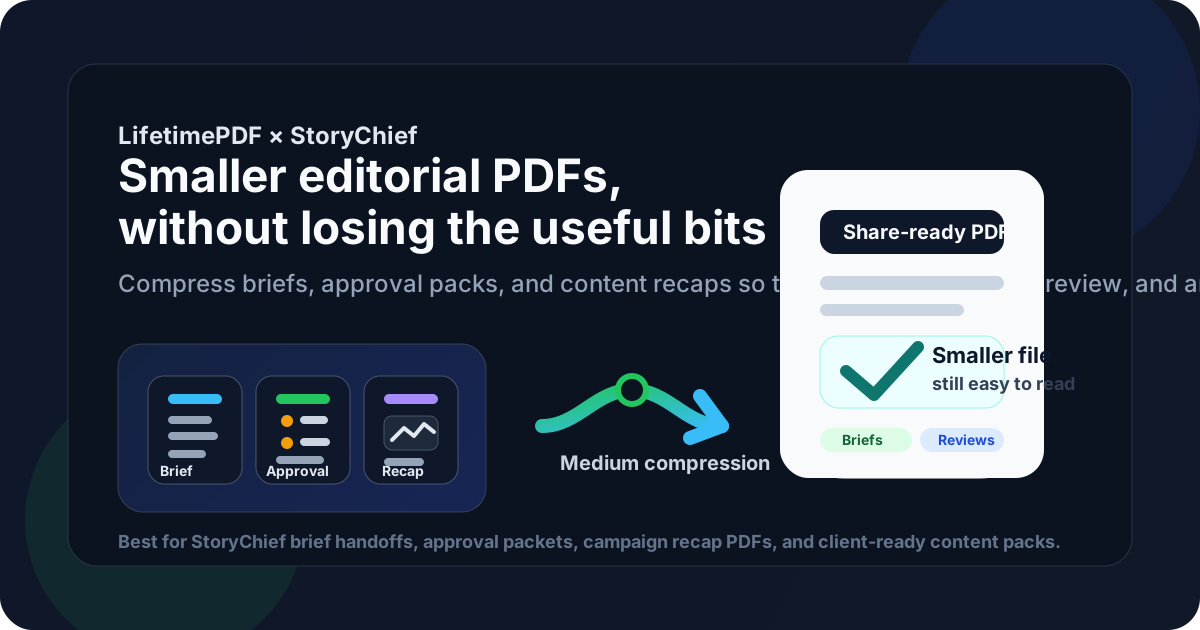
Table of contents
- Quick start: compress a StoryChief PDF in about 2 minutes
- Why smaller PDFs help in StoryChief editorial workflows
- What file size should you aim for?
- Which compression level should you choose?
- Step-by-step: shrink a StoryChief PDF with LifetimePDF
- Best approach for editorial briefs, approvals, and content packs
- What to clean up before compressing harder
- How to keep comments, screenshots, and action notes readable
- Workflow habits that reduce PDF bloat
- Related LifetimePDF tools and useful reading
- FAQ (People Also Ask)
Quick start: compress a StoryChief PDF in about 2 minutes
If your real goal is simply make this StoryChief PDF smaller so it is easier to send, review, or archive, this workflow is usually enough:
- Start with the brief, approval summary, publishing checklist, or client-ready content pack you actually plan to share.
- Open Compress PDF.
- Choose Medium compression first.
- Download the smaller result and compare the new size.
- Check the fragile details once: section headings, screenshot callouts, editor comments, due dates, approval notes, and any action items somebody needs to follow later.
- If the pack is long, use Extract Pages or Split PDF so the next reader only gets the pages they truly need.
- If the file is still too heavy, remove repeated screenshots or crop wide margins before pushing compression harder.
Why smaller PDFs help in StoryChief editorial workflows
StoryChief is built for collaboration, but PDFs appear when work needs a fixed handoff. A brief gets shared outside the platform. An approval version is saved for sign-off. A campaign recap gets attached to an email or dropped into a client folder. Once the file becomes a PDF, size starts affecting whether it feels easy or annoying to use.
Heavy PDFs create friction in boring but real ways. They upload more slowly, feel clumsy to forward, and are harder to preview on mobile when someone only needs the short version. In practice, the extra weight usually comes from screenshot-heavy pages, duplicated appendix material, wide capture margins, or one oversized pack trying to serve every audience at once. Compression helps, but the bigger win is often a PDF that is both smaller and more focused.
- Faster handoffs: smaller PDFs are easier to send in email, project tools, and client portals.
- Smoother review: lighter files open faster when someone only needs the summary or approval page.
- Cleaner archives: recurring briefs and campaign recaps are easier to store when they are not padded with dead weight.
- Better collaboration: writers, editors, and clients are more likely to actually open a focused lightweight file.
- Less resend drama: compressing once is usually easier than rebuilding and resending a bulky pack later.
What file size should you aim for?
There is no single magic number because a one-page brief behaves differently from a screenshot-backed campaign pack. Still, practical ranges keep you from compressing harder than the workflow actually needs.
| StoryChief PDF type | Practical target | What matters most |
|---|---|---|
| Single editorial brief or focused approval page | About 0.5MB to 2MB | Headings, comments, dates, notes, and clean scan-free reading on any screen |
| Publishing checklist or short content pack | About 1.5MB to 3MB | Action items, status details, screenshot labels, and section structure |
| Screenshot-backed recap or client-ready review pack | About 2MB to 4MB | Visual proof, summary notes, highlighted changes, and next-step clarity |
| Anything above 5MB | Usually needs cleanup first | At that size, appendix sprawl, duplicate captures, or wasted margins are often the real problem |
The right target depends on what the next reader truly needs. If the PDF exists to approve a draft, hand off a brief, or save a clean publishing record, protect the details that make those actions possible. The goal is not a dramatic percentage drop. The goal is a file that feels easier to work with in a real editorial workflow.
Which compression level should you choose?
The easiest mistake is jumping straight to the strongest setting because the file feels annoyingly large. That is how you turn a useful handoff pack into fuzzy headings and soft screenshot labels. For most StoryChief PDFs, this order works better:
- Low compression: useful when the PDF is already clean and only needs a light trim.
- Medium compression: the best default for most briefs, approvals, checklists, and recap packs.
- High compression: worth testing only after removing duplicate pages, cropping wasted space, or splitting the appendix.
Step-by-step: shrink a StoryChief PDF with LifetimePDF
- Save the final working copy first. Use the file you actually want to attach or archive, not a draft full of pages nobody needs anymore.
- Open Compress PDF.
- Upload the file. This could be a brief, approval summary, publishing checklist, campaign recap, or client-ready content pack.
- Start with Medium compression. It is usually the safest first pass for StoryChief exports.
- Download the smaller result. Check the new size and decide whether it already feels easier to handle.
- Preview the weak spots. Look at headings, dates, comments, screenshot labels, notes, highlighted revisions, and action items.
- Use structure fixes only if needed. If the file is still too heavy, extract the useful section, delete duplicate pages, crop wasted margins, or split the appendix before trying a stronger setting.
Useful sequence: compress first, then clean the packet structure. In editorial workflows, the oversized file is often carrying too much baggage, not too little compression.
Best approach for editorial briefs, approvals, and content packs
1. Editorial briefs
These usually compress well because the most important material is structural text. Medium compression is often enough. The real risk is not losing a pretty cover page. It is softening headings, must-cover points, notes, and examples just enough to slow the next writer down.
2. Approval PDFs
Approval files often mix the core brief with status notes, comments, screenshots, and revision context. If the pack stays large after one pass, the fix is often cleanup rather than harsher compression. Keep the pages that support the decision and move the backup evidence elsewhere.
3. Publishing checklists and handoff packs
These files are meant to help someone act. That means clarity matters more than chasing the smallest possible number. If the checklist is long, split the appendix or extract the current round instead of forcing the whole packet smaller.
4. Client-ready content packs
Client PDFs are where bloat sneaks in. They collect notes, screenshots, examples, and appendix pages because everyone wants to be thorough. Compression helps, but smarter packaging helps more. Keep the main story in one file and the backup evidence in another if the client does not need both at once.
5. Campaign recap PDFs
Recap packs often grow fast because they combine commentary, screenshots, and status proof from several steps in the workflow. Medium compression is usually the right first move. If the PDF stays heavy, trim repeated captures and remove pages that answer questions nobody is asking in this handoff.
What to clean up before compressing harder
When a StoryChief PDF stays heavy after one reasonable compression pass, the issue is often packaging rather than image density. Try these in order:
- Delete repeated or stale pages. This helps more than people expect in approval packs and recap files.
- Extract only the pages the next reader needs. A focused six-page packet is usually better than a twenty-page archive dump.
- Split the appendix. Keep the decision-ready summary in one PDF and the backup evidence in another.
- Crop empty borders and oversized captures. Screenshot waste adds size without adding proof.
- Only then try stronger compression. By that point, the file is usually leaner already.
How to keep comments, screenshots, and action notes readable
Before you keep the compressed copy, check the weakest details on the page rather than the strongest ones. Big headings almost always survive. The useful details are what quietly fail.
- Section headings and labels: confirm the structure is still easy to scan.
- Dates and status text: especially on approval pages and publishing checklists.
- Editorial comments and notes: these are easy to blur on dense pages.
- Screenshot callouts and highlighted changes: proof only helps if the labels still read clearly.
- Action items and recommendations: the next person should not have to guess what the page says.
- Any detail a writer, editor, or client may need tomorrow: protect it today.
A 20-second review saves far more time than rebuilding a packet later because somebody could not read one note or one comment that actually mattered.
Workflow habits that reduce PDF bloat
- Export once from the cleanest source available. Re-exporting screenshots and old versions usually adds weight without adding value.
- Trim before you merge. It is easier to keep one content pack clean than to repair a giant combined PDF later.
- Separate the summary from the appendix. Not every reader needs every page.
- Keep only screenshots that add proof. Repeated captures make the file heavier without making the argument stronger.
- Review one sample page before forwarding everything onward. Catching blur early is cheaper than resending the packet later.
Related LifetimePDF tools and useful reading
StoryChief document prep often turns into a few follow-on tasks. These tools usually pair well with compression:
- Compress PDF for the first size-reduction pass.
- Extract Pages when only part of the packet needs to travel.
- Delete Pages to remove duplicate or stale pages.
- Split PDF when one file is doing two jobs at once.
- Crop PDF to trim dead screenshot borders.
- PDF Metadata Editor to clean hidden title and document properties before distribution.
If you want adjacent reading, these guides fit the same workflow family: Compress PDF for StoryChief, Compress PDF for Content Harmony, Compress PDF for Frase, Compress PDF for Google Search Console, and How to Reduce PDF File Size for Email.
Bottom line: if the StoryChief PDF is too large, start with Medium compression, protect the editorial details that matter, and clean the packet structure before you force the file any harder.
FAQ (People Also Ask)
How do I compress a PDF for StoryChief?
Export the StoryChief brief or approval file as a PDF, upload it to a PDF compressor, start with Medium compression, and keep the smaller copy only after checking headings, comments, screenshots, notes, and action items. For most StoryChief handoff PDFs, Medium is the safest first move because it reduces file size without weakening editorial clarity.
What file size should I aim for with StoryChief briefs and approval PDFs?
Single editorial briefs and focused approval PDFs usually work well under 2MB. Larger content packs, screenshot-backed recaps, and client-ready review files often land better around 2MB to 4MB as long as the smallest useful details remain easy to read.
Will compression make StoryChief screenshots or comments blurry?
It can if you compress too aggressively. That is why Medium compression is usually the best first move. Always review screenshot callouts, comments, highlighted notes, dates, and section headings before you keep the smaller file.
Should I split a large StoryChief content pack instead of compressing it harder?
Often, yes. If one PDF combines the main brief, comments, screenshots, approvals, checklist pages, and appendix material for different readers, splitting it usually works better than forcing stronger compression across the whole pack.
What if the StoryChief PDF is still too large after compression?
Delete repeated screenshots, crop empty borders, extract only the pages the next writer, editor, or client actually needs, or split appendix sections into a separate file before pushing compression harder. In many StoryChief workflows, better packet structure helps more than stronger compression.
Published by LifetimePDF - Pay once. Use forever.