Compress PDF for Sage 200: Keep Invoices, Statements, and Supporting Documents Small Without Losing Detail
To compress a PDF for Sage 200, upload the final invoice packet, statement PDF, receipt bundle, delivery note, or supporting document to LifetimePDF's Compress PDF tool, start with Medium compression, and keep the smaller copy only if supplier names, customer names, dates, invoice numbers, VAT lines, references, and totals still read clearly.
For most Sage 200 workflows, under 2MB is a strong target for text-heavy files, while scan-heavy receipts, mixed support packets, and archive bundles usually work better around 2MB to 5MB after light cleanup.
Sage 200 PDFs usually get heavy for ordinary reasons. One clean invoice turns into a support packet with a delivery note, statement page, receipt images, approval screenshots, and a scan of something that was already digital. The best result is not the smallest file possible. It is a smaller PDF that still feels dependable when finance, operations, credit control, or an auditor opens it later and needs one exact detail to be obvious.
Fastest path: save the final Sage 200-ready PDF, run it through LifetimePDF's Compress PDF tool at Medium, then clean up extra pages, split bulky appendices, or run OCR only if the file is still heavier than the next workflow step really needs.
Need the short version? Jump to Quick start: compress a Sage 200 PDF in about 2 minutes.
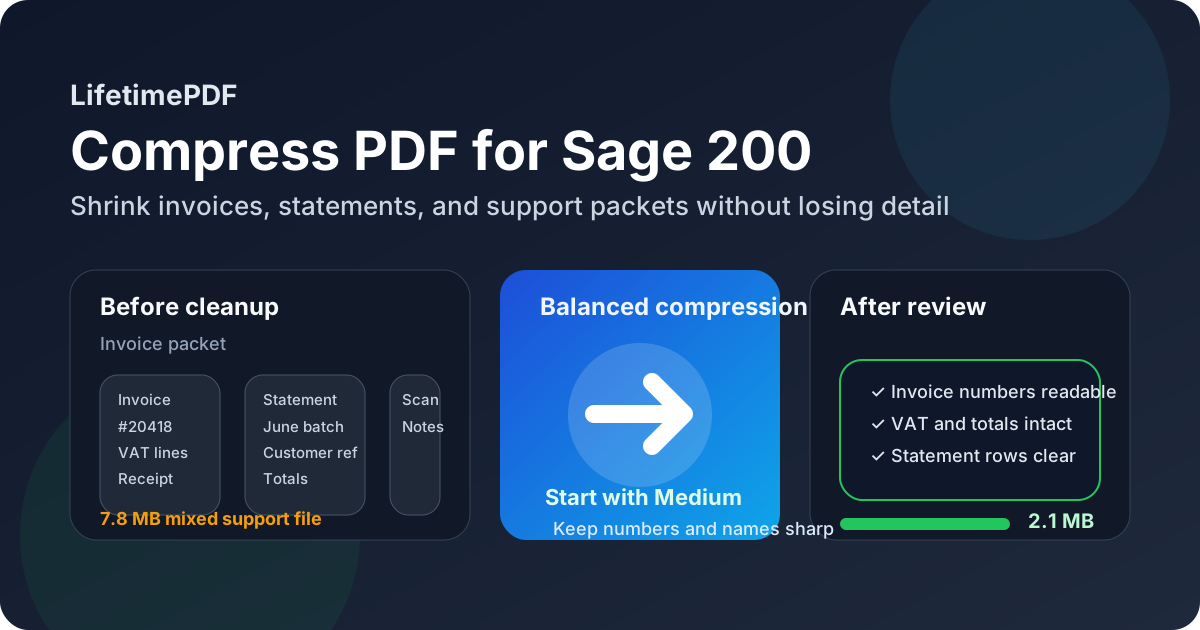
Table of contents
- Quick start: compress a Sage 200 PDF in about 2 minutes
- Why Sage 200 PDFs get bulky
- What file size should you aim for?
- Which compression level should you choose?
- Step-by-step: shrink a Sage 200 PDF with LifetimePDF
- Best approach for common Sage 200 document types
- What to clean up before compressing harder
- How to keep accounting details readable
- Workflow habits that reduce PDF bloat
- Related LifetimePDF tools and useful reading
- FAQ (People Also Ask)
Quick start: compress a Sage 200 PDF in about 2 minutes
If your real goal is simply make this Sage 200 PDF smaller so it is easier to upload, send, or archive, this workflow is usually enough:
- Start with the invoice packet, customer statement, receipt bundle, delivery note, order-support file, or archive document you actually plan to keep.
- Open Compress PDF.
- Upload the file and choose Medium compression first.
- Download the smaller result and compare the new size with the original.
- Preview the weakest details: invoice numbers, dates, VAT lines, totals, statement rows, order references, supplier names, and customer references.
- If the file came from a scanner or phone camera, run OCR PDF when needed so the final document is searchable as well as smaller.
- If the packet still feels bulky, remove duplicate pages or split the appendix before you try stronger compression.
Why Sage 200 PDFs get bulky
Sage 200 files often become oversized because they collect normal business proof over time. One transaction packet can include the invoice, delivery note, statement page, receipt backup, approval screenshots, a printed scan of something that was already digital, and an appendix somebody never trimmed. None of those pieces feels dramatic on its own. Together, they turn a clean record into a file that is heavier than the useful information inside it.
Good compression is not about chasing the smallest possible number. It is about removing avoidable weight while preserving the details that let someone trust the document later. In Sage 200 workflows, that usually means protecting document numbers, supplier and customer names, dates, VAT lines, totals, statement rows, and the notes that explain what happened.
Why balanced compression usually pays off
- Faster uploads and handoffs: smaller PDFs move more easily between finance staff, managers, outside accountants, and customers.
- Smoother review: lighter files open faster when someone is checking an invoice, statement row, payment reference, or support packet.
- Less scan waste: phone captures and printed rescans often carry empty borders, shadows, and oversized images that add nothing useful.
- Cleaner archives: month-end and year-end folders stay easier to store and revisit.
- Better audit readiness: a smaller but still readable PDF is easier to trust than a bloated packet nobody wants to reopen.
What file size should you aim for?
There is no single magic number for every Sage 200 workflow, but realistic target ranges help you avoid compressing harder than necessary:
| Document type | Good target range | What to protect |
|---|---|---|
| Invoices, customer statements, credit-control pages | About 0.5MB to 2MB | Names, document numbers, dates, VAT lines, totals, reference fields |
| Receipt bundles and delivery-note support | About 1MB to 3MB | Merchant names, dates, totals, item text, handwritten notes |
| Order paperwork and mixed support packets | About 2MB to 5MB | Order references, statement rows, invoice tables, signatures, approval notes |
| Scan-heavy archive or audit packets | Often 3MB to 6MB after cleanup | Faint scan text, stamps, annotations, small printed totals, supporting proof |
The right size depends on what the next reviewer actually needs. If the file exists to prove a total, date, supplier, customer, reference, or approval trail, protect that information first. Reliability beats aggressive shrinkage.
Which compression level should you choose?
Problems usually start when someone jumps straight to the strongest setting because the file looks large. That often creates blur that did not need to happen. In most Sage 200 workflows, a measured approach works better:
- Low compression: useful when the PDF is already fairly light and only needs a small trim without disturbing fine tables or faint print too much.
- Medium compression: the best default for most invoices, statements, delivery notes, receipt bundles, and mixed accounting packets because it usually cuts size without hurting readability.
- Strong compression: use this only after checking that the document has visual weight to spare or after you already removed duplicate pages, wasted margins, and irrelevant appendix material.
Step-by-step: shrink a Sage 200 PDF with LifetimePDF
- Save the final working copy first. Use the PDF you actually plan to upload, email, or archive rather than a draft with extra appendix pages.
- Open Compress PDF.
- Upload the file. This could be a supplier invoice, customer statement, delivery-note bundle, receipt packet, order-support file, or general accounting PDF.
- Start with Medium compression. It is usually the safest first pass for Sage 200 documents.
- Download the smaller result. Check the new size and decide whether it already feels easier to handle.
- Preview the small details. Inspect invoice numbers, dates, VAT lines, customer references, statement rows, totals, and any faint notes.
- Run OCR if needed. If the text is not selectable or the pages came from a scanner, use OCR PDF.
- Trim structure before pushing compression harder. Use Delete Pages, Extract Pages, or Split PDF if the packet carries more pages than the next person needs.
Best approach for common Sage 200 document types
1. Supplier invoices and purchase support
These are usually the easiest PDFs to compress because the most important information is text-based. The real risk is not compression itself. The risk is losing clarity in invoice numbers, dates, supplier names, VAT lines, or totals. Medium compression is usually enough. If the file is still large, the extra weight often comes from scanned covers, duplicate support, or email printouts nobody needs.
2. Customer statements and credit-control backup
Statements need rows of figures to stay crisp. Aggressive compression can make those lines feel mushy at the exact moment someone needs to trace one balance or payment reference. Use Medium compression, then zoom in on dates, amounts, references, and small row labels before you accept the smaller result.
3. Receipt bundles and expense paperwork
Receipt packets get bulky fast because they often come from phone photos or low-quality scans. Here, OCR and cleanup matter almost as much as compression. If one packet mixes thermal-paper receipts, screenshots, and summary pages, compressing the whole thing harder is often the wrong move. Clean the structure first, then keep the smallest useful copy.
4. Delivery notes and order-support files
These documents often include small printed references and signatures that matter later during disputes or reconciliations. If the real goal is to preserve proof of delivery, approval, or shipment detail, keep those fields obvious and readable. Split appendices, remove repeated pages, and keep the proof path easy to follow.
5. Mixed cross-team handoff files
Some Sage 200 PDFs are a little of everything: an invoice, a statement page, a scan, and a couple of screenshots. In those cases, do not assume one global setting solves the whole problem. Compress once, review the weakest page, and then decide whether the next move is OCR, page extraction, or cropping rather than stronger compression.
What to clean up before compressing harder
When a Sage 200 PDF stays heavy after one reasonable compression pass, the issue is often packaging rather than image density. Try these in order:
- Delete blank or repeated pages. This solves more than people expect.
- Extract only the pages the next reviewer needs. A short support packet is better than a giant archive dump when the workflow only needs one transaction trail.
- Split oversized packets. Keep the main support in one PDF and the appendix in another.
- Crop wasted scan borders. Phone-captured paperwork often carries a surprising amount of dead space.
- Run OCR on image-only files. Searchability matters long after the first upload.
- Only then try stronger compression. By this point, the file is usually leaner already.
How to keep accounting details readable
Before you keep the compressed PDF, check the weakest details on the page rather than the strongest ones. Big headings almost always survive. The useful details are what can quietly fail.
- Invoice and statement numbers: make sure every digit is still clean.
- Dates: especially on receipts, delivery notes, statements, and approval lines.
- Totals and VAT lines: confirm the currency amounts still read clearly.
- Supplier and customer names: watch for fuzzy small caps or faint print.
- Order references and internal notes: zoom in on the densest tables and small annotations.
- Handwritten or scanned marks: these are easy to lose if the source was already weak.
A 20-second review saves more time than rebuilding the packet later because someone could not read the number they needed.
Workflow habits that reduce PDF bloat
The easiest megabyte to remove is the one you never create. A few small habits can keep Sage 200 PDFs lighter from the start:
- Export digitally when possible instead of printing and rescanning an already-digital invoice or statement.
- Keep one final packet rather than saving several versions with the same appendix pages inside each file.
- Separate the summary from the appendix when one reviewer only needs the core support.
- Trim phone-captured receipts early before they get merged into a larger packet.
- Run OCR before archive so future search and audit work are easier, not harder.
None of this is complicated. It just prevents a normal accounting document from turning into a slow, messy archive file that nobody enjoys reopening.
Related LifetimePDF tools and useful reading
Sage 200 document prep often turns into a few small follow-on tasks. These tools usually pair well with compression:
- Compress PDF for the first size reduction.
- OCR PDF for scanned receipts, statements, and supporting paperwork.
- Extract Pages when only part of the packet needs to travel.
- Crop PDF to remove empty scan borders and dead space.
- Split PDF when one oversized packet should really be two smaller files.
- PDF Metadata Editor to clean hidden document properties before sharing or archiving.
If you want adjacent reading, these guides fit the same workflow family: Compress PDF for Sage, Compress PDF for Sage 50, Compress PDF for Sage 100, Compress PDF for Sage 300, Compress PDF for Sage Intacct, and Compress PDF for Sage X3.
Bottom line: if the Sage 200 PDF is too large, start with Medium compression, protect the accounting details that matter, and clean the packet structure before you force the file any harder.
FAQ (People Also Ask)
How do I compress a PDF for Sage 200?
Upload the Sage 200-ready PDF to a compressor, start with Medium compression, and keep the smaller copy only if supplier names, customer names, dates, invoice numbers, VAT lines, order references, and totals still read clearly. Medium compression is usually the safest first pass because it reduces file size without weakening accounting review clarity.
What file size should I aim for with Sage 200 PDFs?
Text-heavy invoices, statements, and ordinary support files usually work well under 2MB. Scan-heavy receipts, delivery notes, and mixed support packets often fit better around 2MB to 5MB as long as the smallest useful details still read clearly.
Will compression blur invoice numbers or VAT lines in Sage 200 files?
It can if you compress too aggressively. That is why Medium compression is usually the best starting point. Always review invoice numbers, dates, totals, VAT lines, references, statement rows, and approval notes before replacing the original file.
Should I run OCR on scanned Sage 200 attachments?
Usually yes if the PDF came from a scanner or phone camera and the text is not selectable. OCR makes Sage 200 support easier to search, review, and reuse later during finance work, credit control, or audit follow-up.
What if the Sage 200 PDF is still too large after compression?
Delete duplicate or blank pages, crop empty scan borders, split one oversized packet into summary and appendix files, or extract only the pages the next reviewer actually needs. Better packet structure often helps more than harsher compression.